Rhodes tracks every fund’s calls and distributions, and flags the K‑1 that’s late.
Start your Rhodes officeForward five documents and see what it finds.
30-day trial. Card at signup, nothing charged until day 30.
You find out when your return is held up. Which funds are late? You’d have to check each one.
Due in three weeks, from a fund you committed to four years ago, owed by an entity you have to look up.
Committed, called, contributed, distributed. The numbers live in a dozen notices across a dozen portals.
Shown with a fictional family’s records. The product is real.
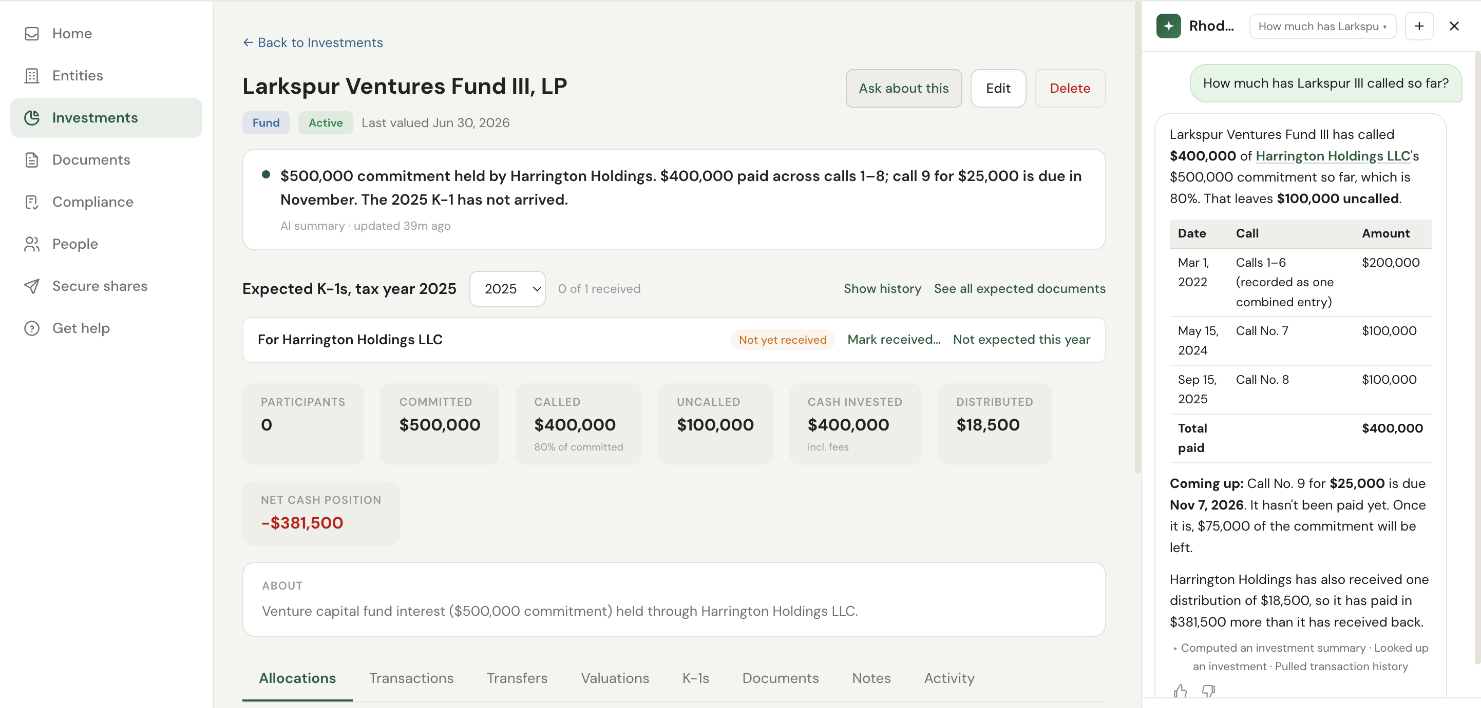
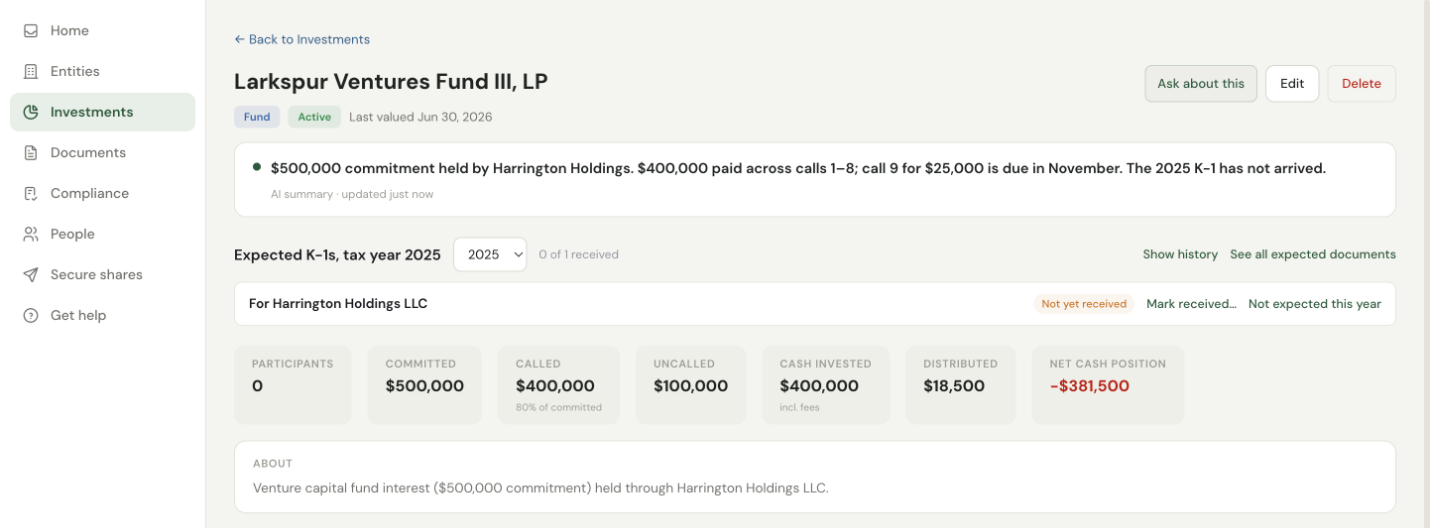
Every fund shows what you committed, what’s been called, what’s left and what’s come back, with the year’s expected K‑1s and whether they’ve arrived.

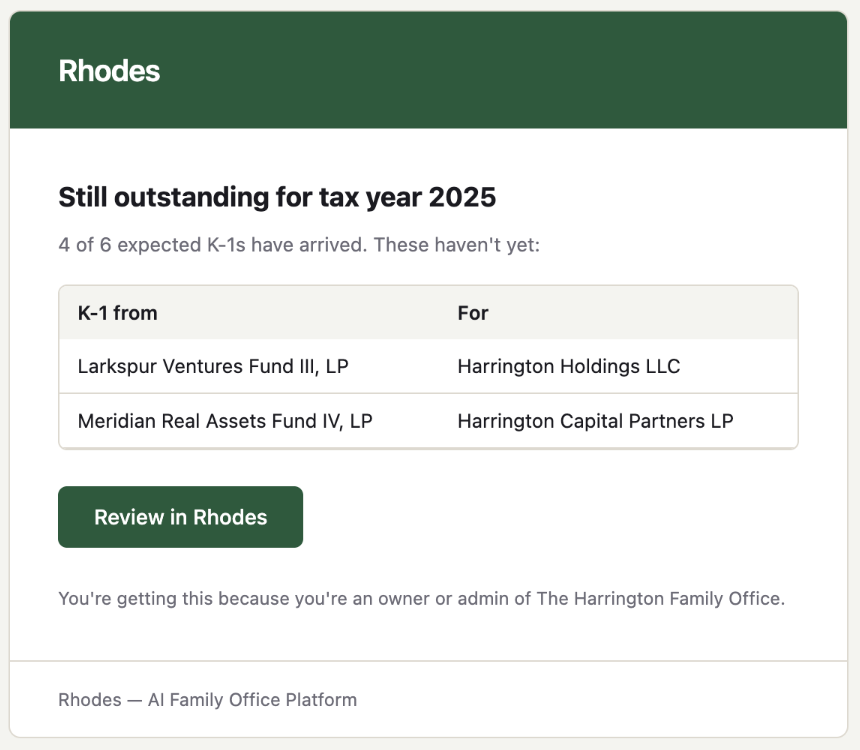
Rhodes tracks the K‑1 each fund position should send every year and emails a short list of the ones that haven’t arrived, with the entity that’s owed each one.

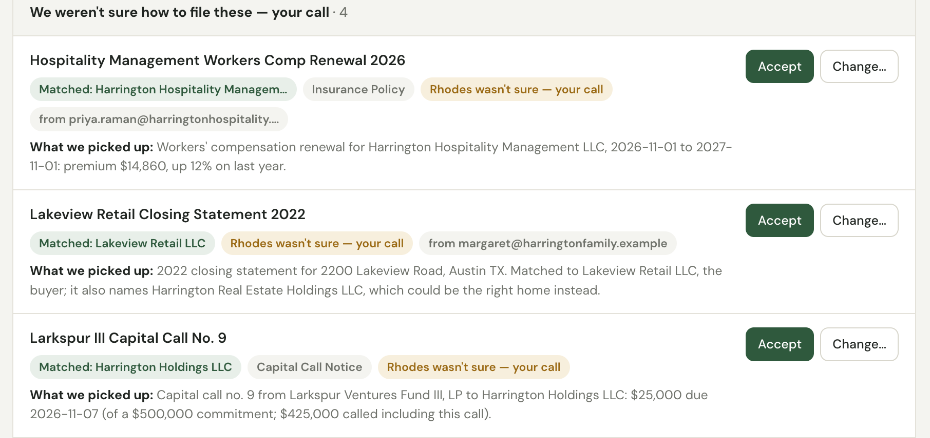
Forward the notice. Rhodes reads it, picks out the amount and due date, matches it to the investment and the entity that holds it, and asks you to confirm.

Ask in plain English across every position. Rhodes answers from your notices and records and shows its work.

Every position held by the right entity, with the paper trail behind it.
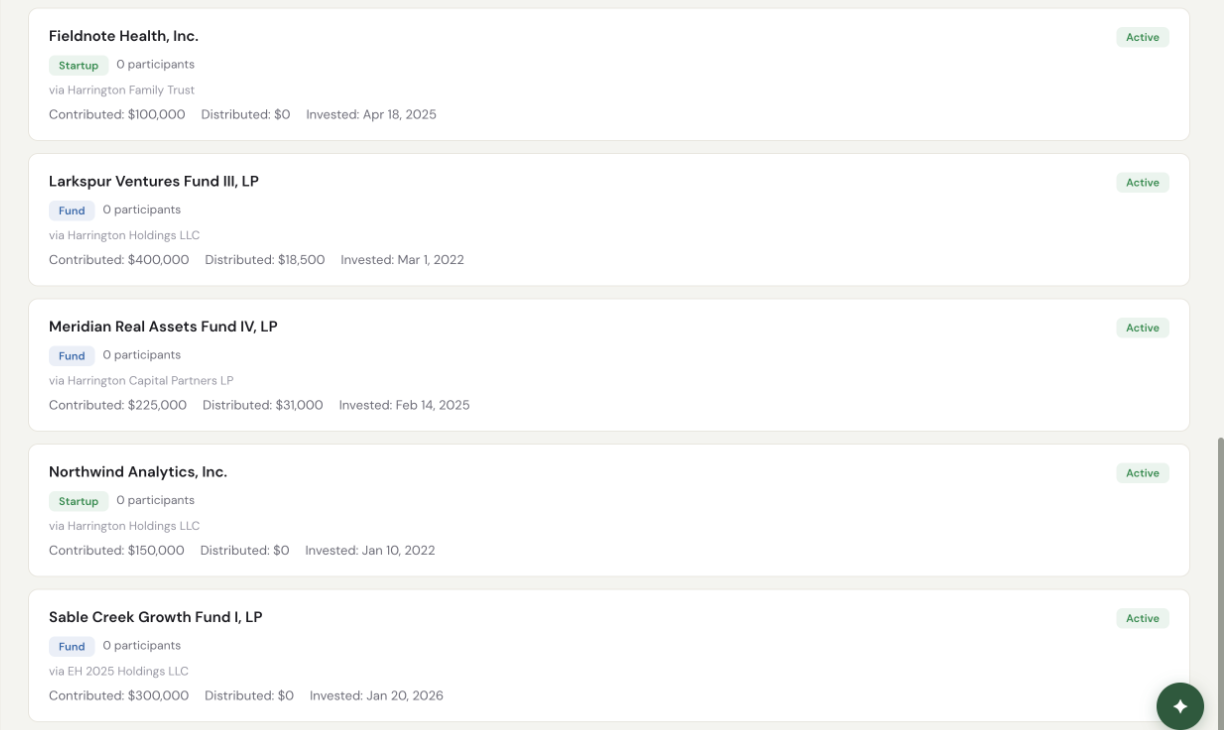
LP positions, co-invests and direct stakes in one list.
Every call matched to its investment and the entity that owes it.
What’s come back, from where, and to which entity.
Each year’s K‑1s tracked until they arrive.
Positions sit with the trust, LLC or partnership that owns them.
K‑1s go to whoever prepares your return, after you approve.
You know which K‑1s are late before anyone has to ask.
Every capital call filed, matched and visible the day it arrives.
Committed, called and distributed, from the notices themselves.
Each investment sits with the entity that actually holds it.
And when Rhodes isn’t sure, it asks. It doesn’t guess.
All the complexity of a family office. None of the staff.
Start your Rhodes office30-day free trial · card at signup, nothing charged until day 30 · cancel anytime
The work of a family office, without hiring the staff.
An LLC for every property, each with its own state and filings.
The companies behind the business: officers, registrations, filings.
Everything a closed deal leaves behind: a holding company, trusts, escrow, an earnout.
Trusts, trustees, and the signed documents your family will need someday.