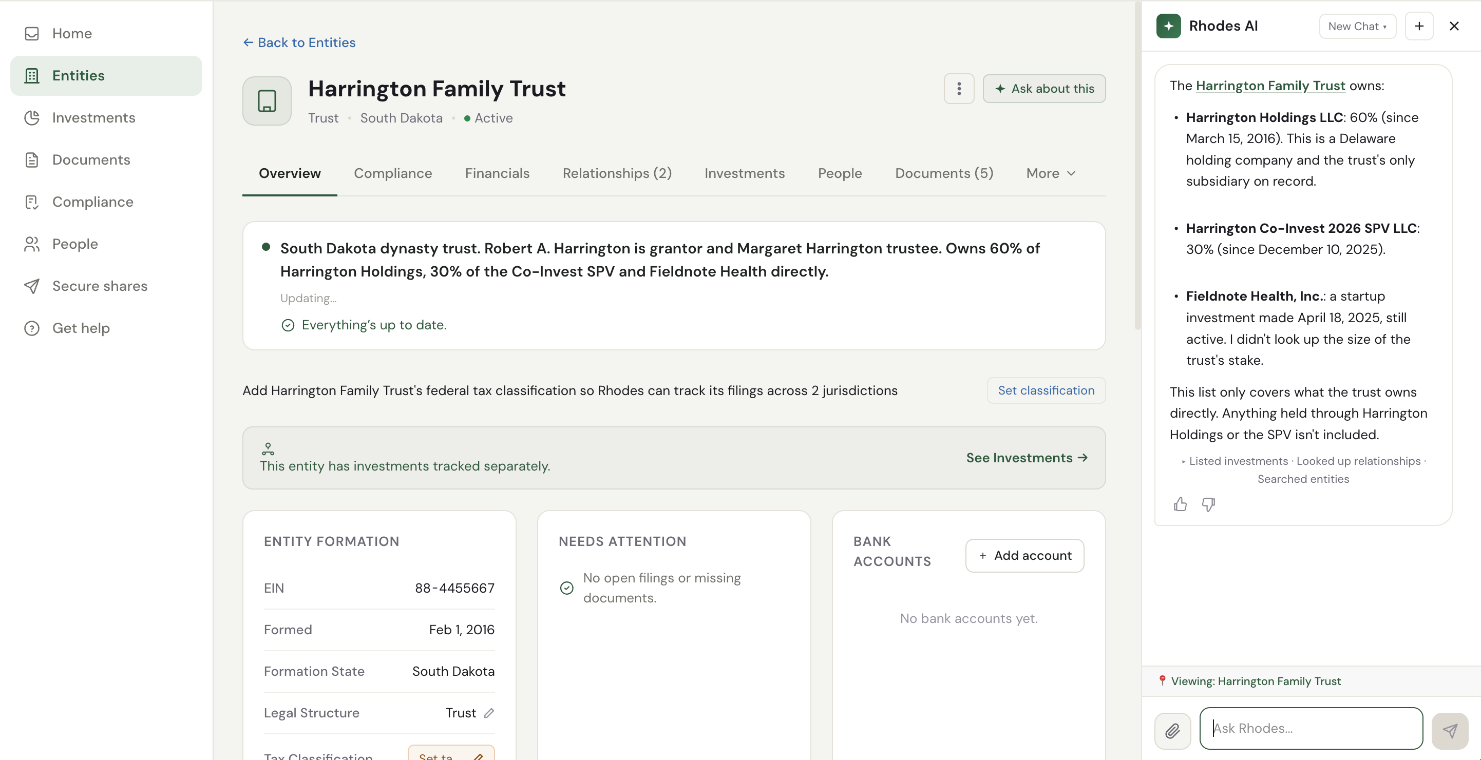
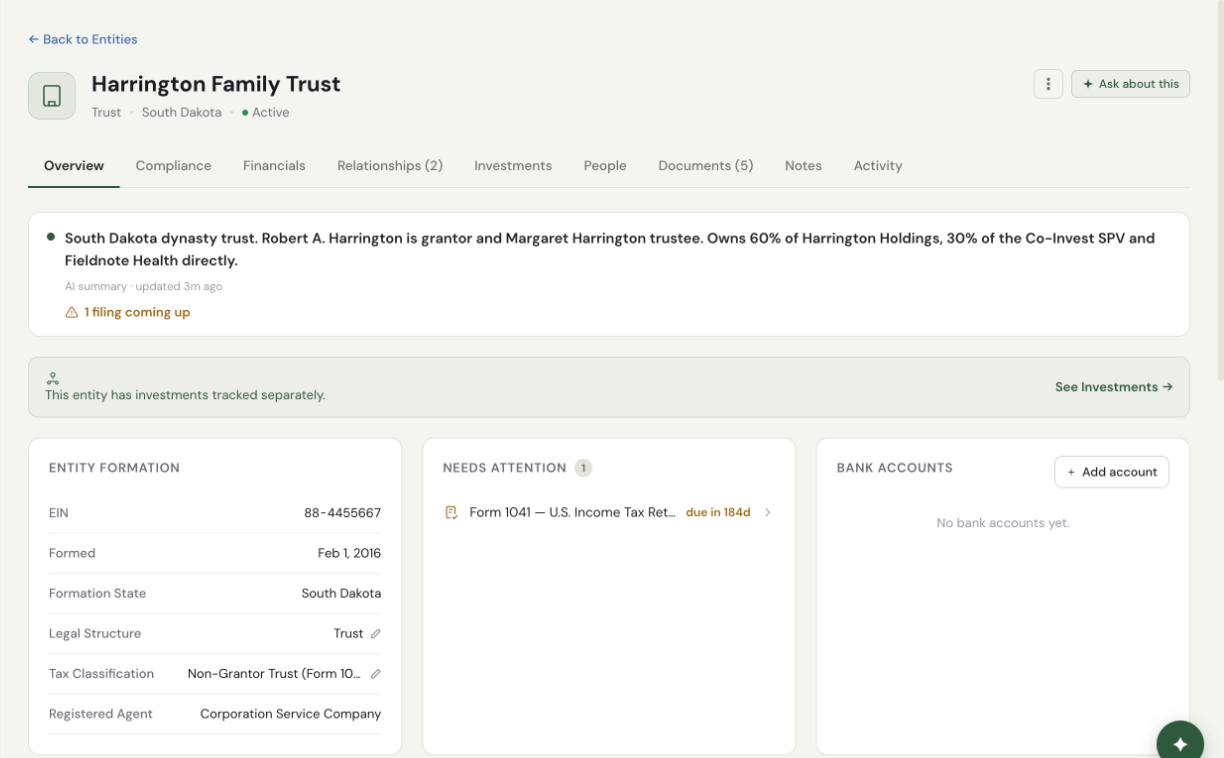
Every trust’s roles, holdings and signed copies, so nobody starts from a binder.
Start your Rhodes officeForward five documents and see what it finds.
30-day trial. Card at signup, nothing charged until day 30.
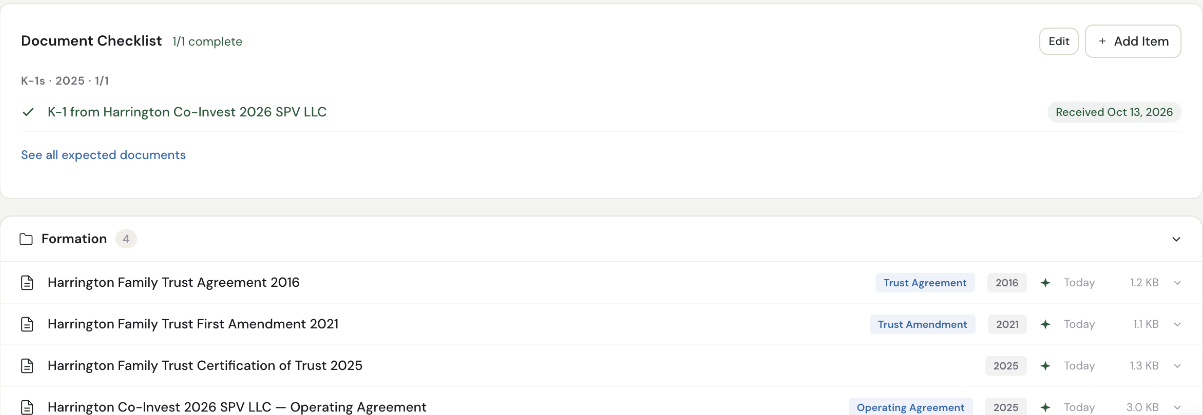
The trust agreement, the amendments, the certification. Signed once, then filed where nobody can find them in a hurry.
A trustee steps down, an amendment names someone new. The change lives in one document, and nobody updates the rest.
An irrevocable trust files its own return, and K‑1s arrive addressed to it. Someone has to keep that calendar.
Shown with a fictional family’s records. The product is real.
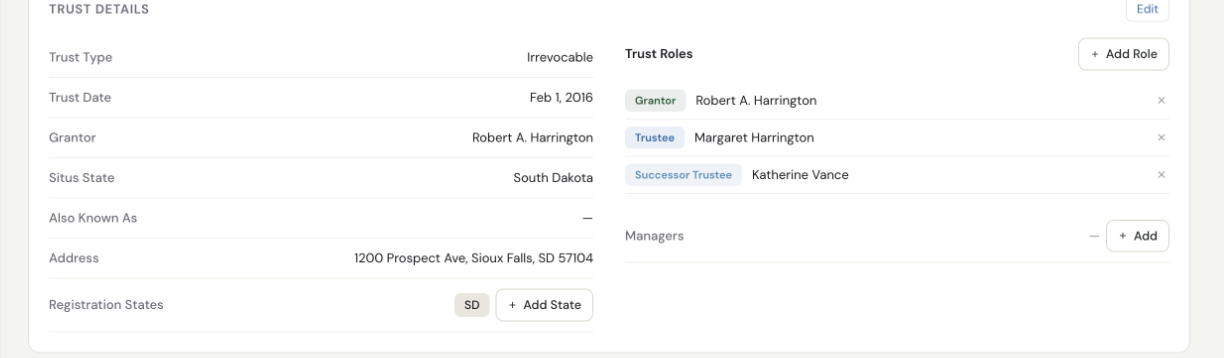
Grantor, trustee, successor trustee, situs and trust type for each trust, read from the trust instrument and its amendments.

The holding company, the SPV, the direct investments. Rhodes answers from your records, with the work shown.

Rhodes builds each trust’s obligations from how it’s set up and taxed, so the Form 1041 isn’t the one that slips.

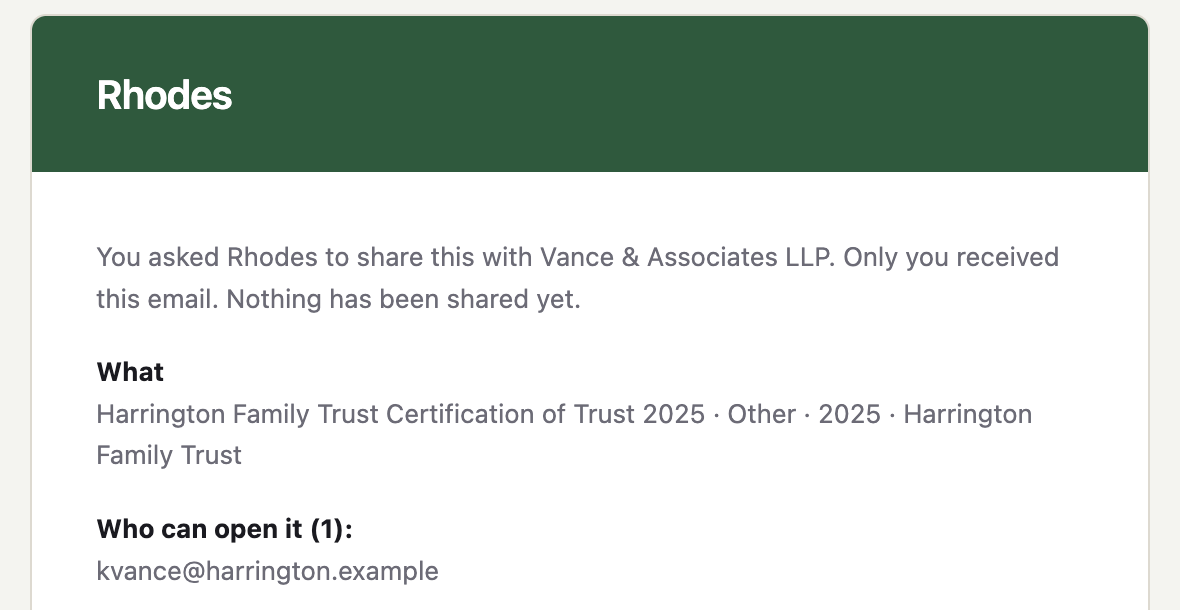
When a bank or an attorney asks for proof of the trust, email Rhodes. It replies with an approval card showing exactly what will go. Nothing is shared until you reply APPROVE.

The plan, the people in it and what it owns, kept as one record.
Grantors, trustees and successors, with the documents behind them.
Trust agreements, amendments and certifications, filed to each trust.
Holdings and the entities underneath, from the records.
Each trust’s returns and state obligations on the calendar.
If a K‑1 owed to the trust hasn’t arrived, Rhodes notices.
Banks and attorneys get documents only after you say so.
The signed copies are a search away, not a drawer away.
Who holds which role is on the record, with the document that says so.
When a successor steps in, the plan and its paperwork are already organized.
Trust returns and state filings tracked with everything else.
And when Rhodes isn’t sure, it asks. It doesn’t guess.
All the complexity of a family office. None of the staff.
Start your Rhodes office30-day free trial · card at signup, nothing charged until day 30 · cancel anytime
The work of a family office, without hiring the staff.
An LLC for every property, each with its own state and filings.
The companies behind the business: officers, registrations, filings.
Funds, SPVs and co-invests, each with its own K‑1 and capital calls.
Everything a closed deal leaves behind: a holding company, trusts, escrow, an earnout.